

Self-healing
Remains flexible (gel-like) and seals new cracks by itself if the structure settles.

Modern solutions to stop damp and water ingress in foundations and basements.
We offer gentle technologies that fit perfectly into the restoration of historic buildings and basement renovation, without disturbing or damaging the building's original structures or the surrounding environment.
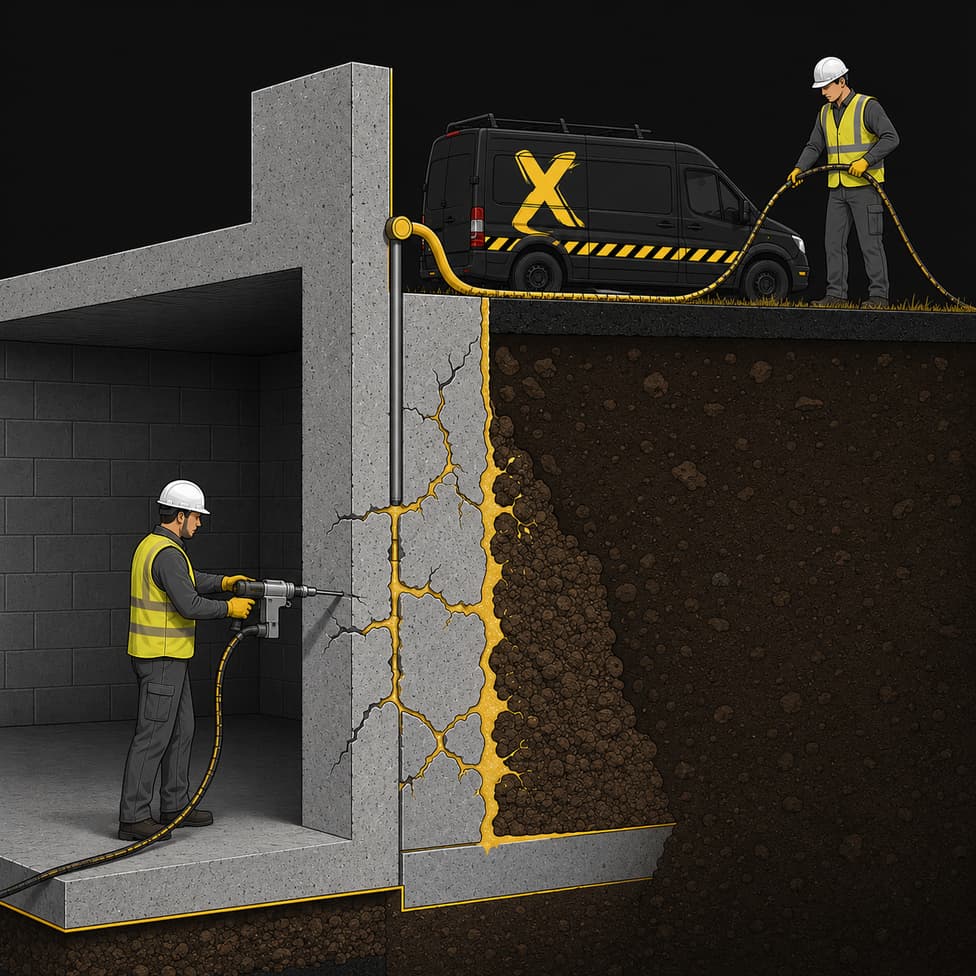
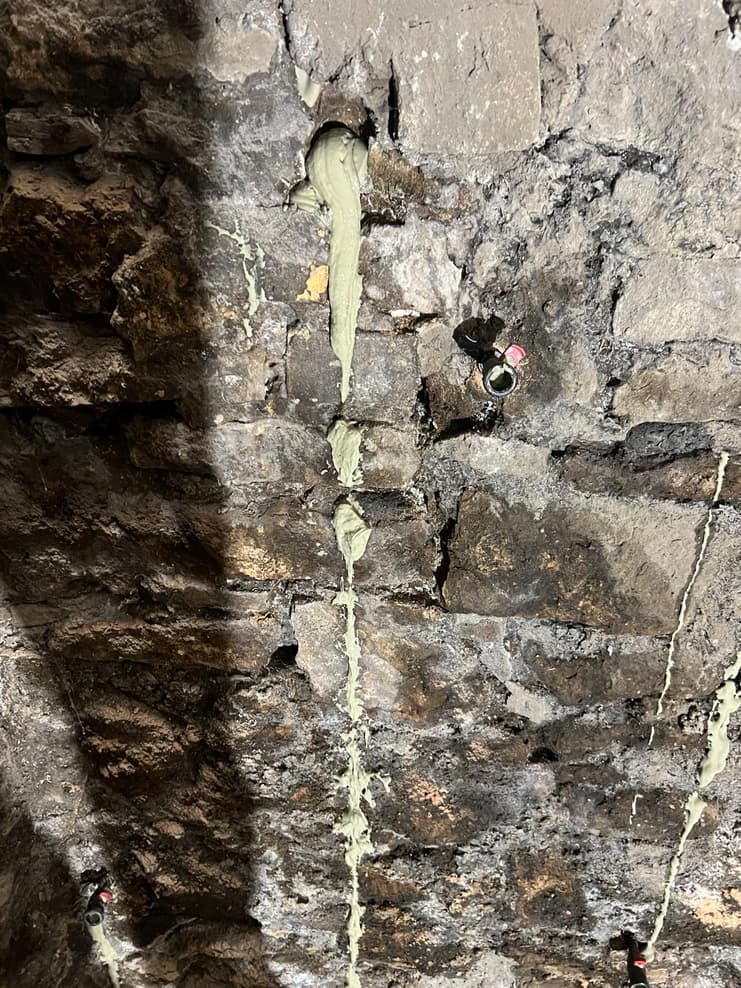
Book a consultationBENTOGROUT is a sealing material based on natural, long-lasting sodium bentonite. Injected from either outside or inside the building, it expands to form a thick, impermeable waterproofing layer - filling voids and cracks in the structure and the adjacent soil, with no excavation work. The material stays "active" throughout its entire service life.
Remains flexible (gel-like) and seals new cracks by itself if the structure settles.

On contact with water, bentonite swells and penetrates every defect in concrete and masonry.

A mineral with no toxic chemicals; safe for groundwater and historic materials.

Trenchless renovation - no damage to asphalt, utilities or landscaping.
Technical assessment of the site and foundations.
The material is injected along the outer wall of the building or from the inside.
A continuous waterproofing layer is formed.
Bentogrout (CETCO system) is used worldwide - in the London and New York metro tunnels, in the cellars of Europe's old towns and for sealing hydroelectric dams.
Bentogrout is a high-performance sealing grout based on natural sodium bentonite. On contact with water it swells and forms a dense, watertight barrier that penetrates every defect in the concrete or masonry. The material can be pumped like a liquid, yet becomes stable where it is placed and does not wash out (thixotropy).
Yes. The vertical barrier is created by injecting the material along the outer face of the structure from inside or outside the building - without digging out the foundation area. This is especially important in urban settings, as asphalt, utility networks, landscaping and neighbouring buildings are left undamaged.
Bentonite is a mineral that does not rot or age, so its waterproofing properties last for as long as the material is present - they do not depend on chemical reactions that weaken over time. The HW steel barrier is a permanent mechanical solution.
Yes. Bentonite is a natural clay with no toxic chemicals or solvents, safe to use even near drinking water reservoirs, and compatible with historic brick masonry and stone foundations.
Yes. In basements, the HW horizontal barrier can be combined with vertical Bentogrout waterproofing to protect against both rising damp and water ingress through the walls.
It depends on the cause of the damp and the situation on site. For rising damp in walls, the horizontal HW barrier is the right choice; for water ingress through foundations and walls - vertical Bentogrout injection. During a site visit, an XFIXI specialist will recommend the most suitable solution.
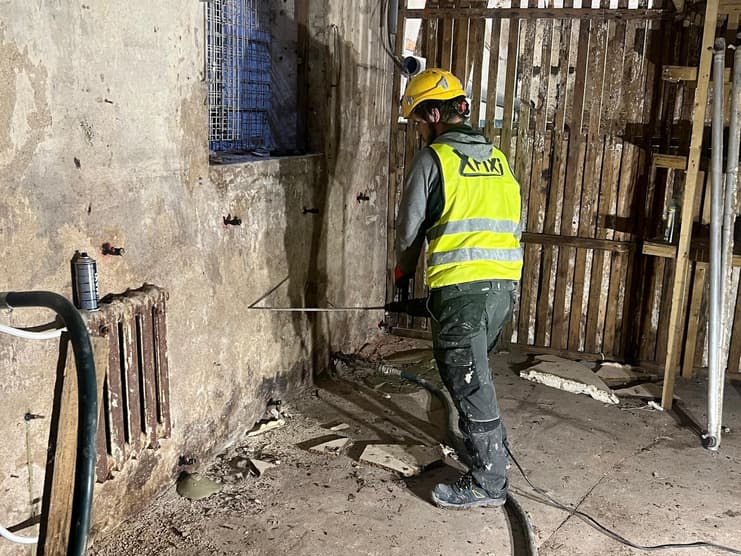
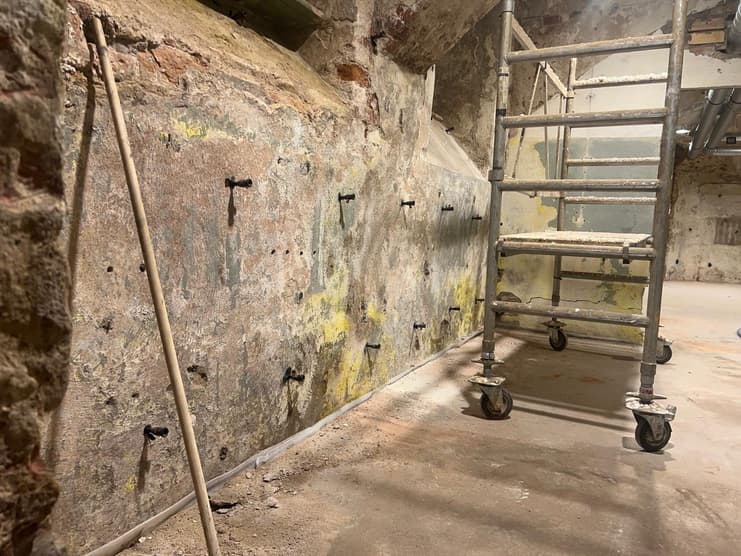
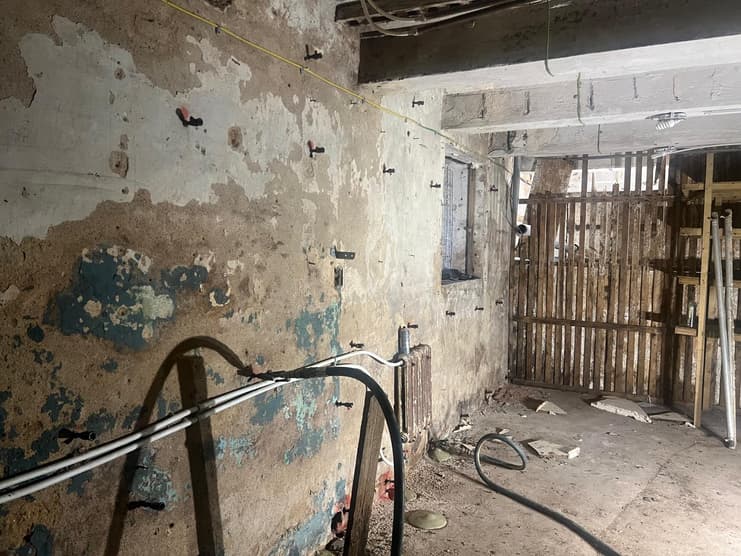
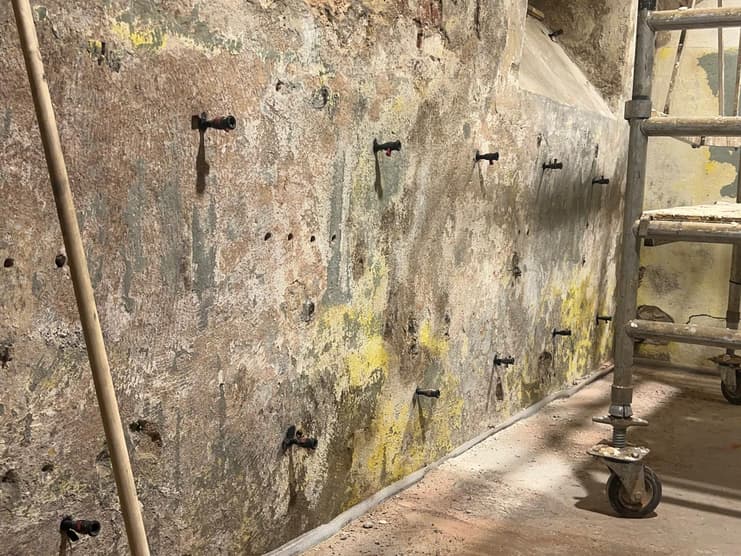
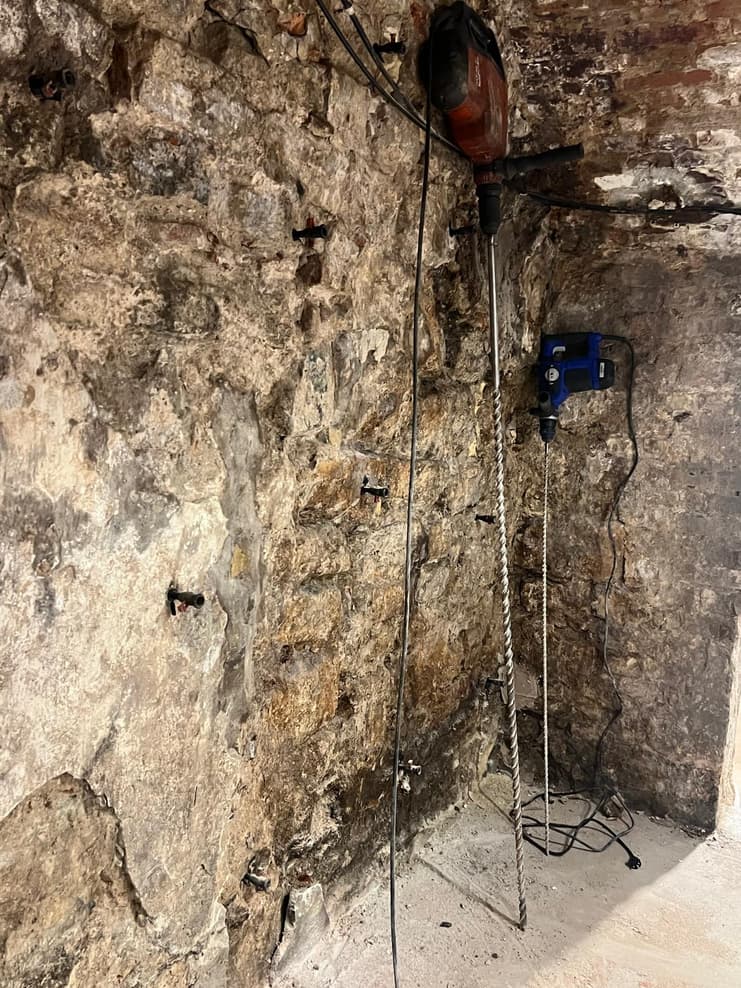
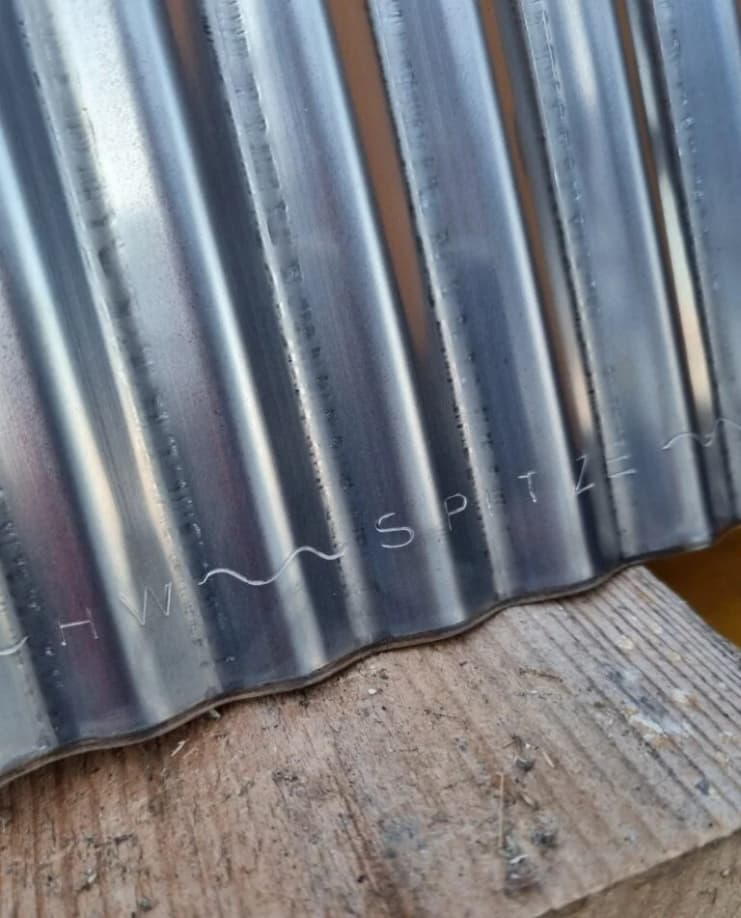
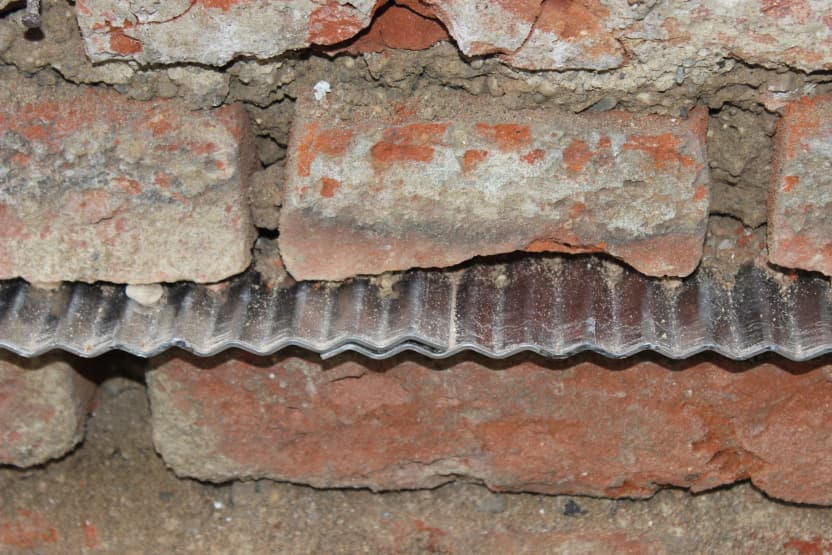
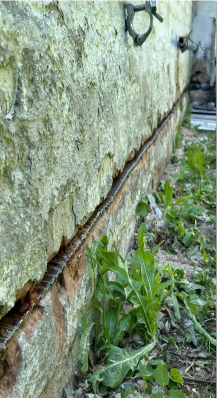
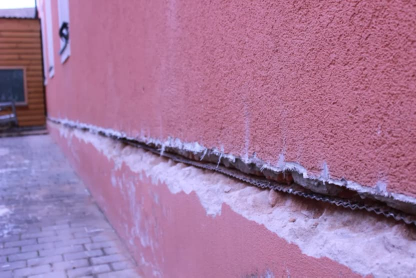
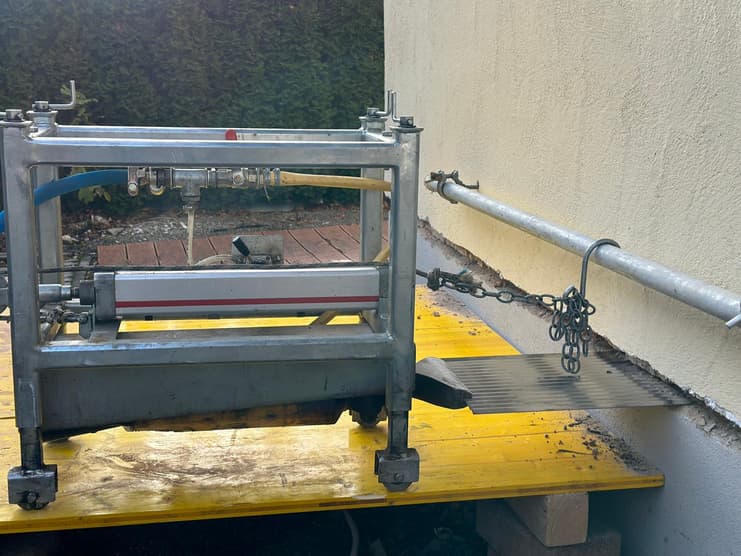
The HW horizontal barrier mechanically stops rising damp. Patented 1.5 mm stainless, acid-resistant steel plates are gently driven into the mortar joint of the masonry - ensuring permanently dry and stable walls, with no drilling and no chemicals.
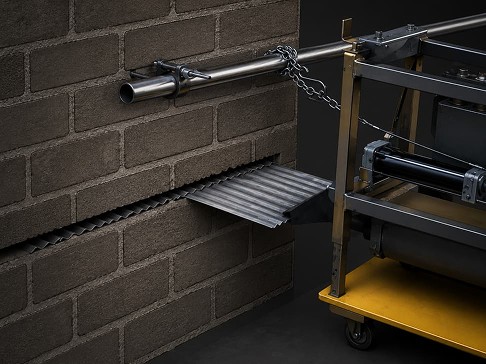

Corrugated, overlapping plates stop the capillary rise of moisture.

Just precise insertion of the plates into the mortar joint.

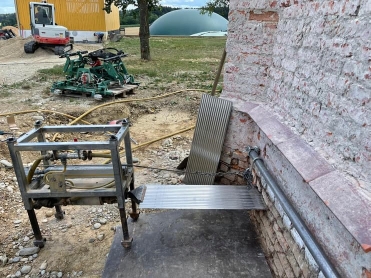
Installed from one side only, including in existing buildings.

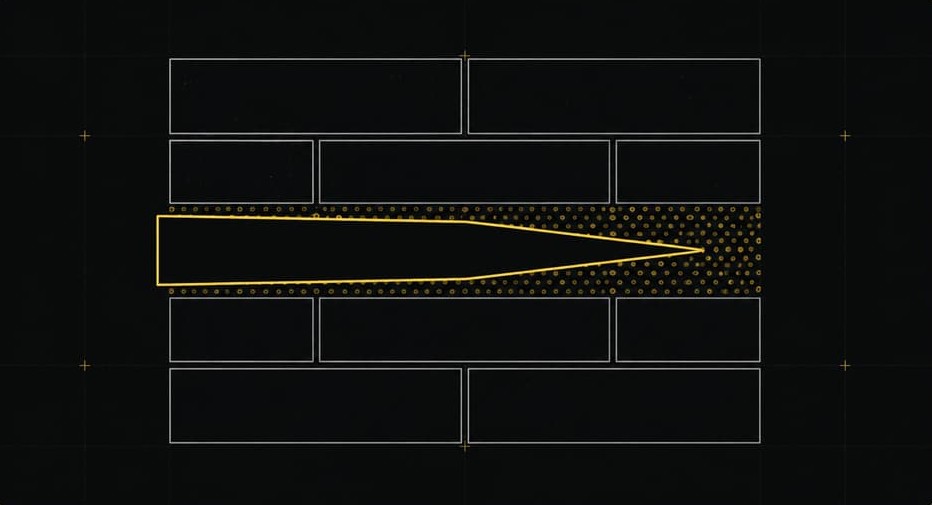
The arrow-shaped leading edge reduces vibration and impact loads.
A flat, non-corrugated plate does not compensate for irregularities in the mortar and does not provide a sealed, permanent barrier.
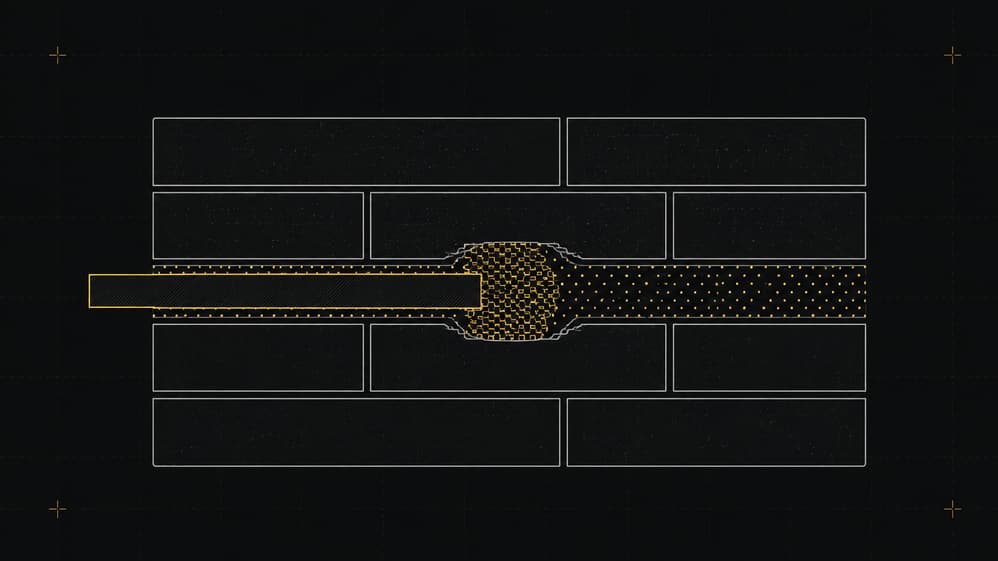
The corrugated, overlapping plate with its arrow-shaped leading edge forms a continuous sealed barrier and protects the structure.
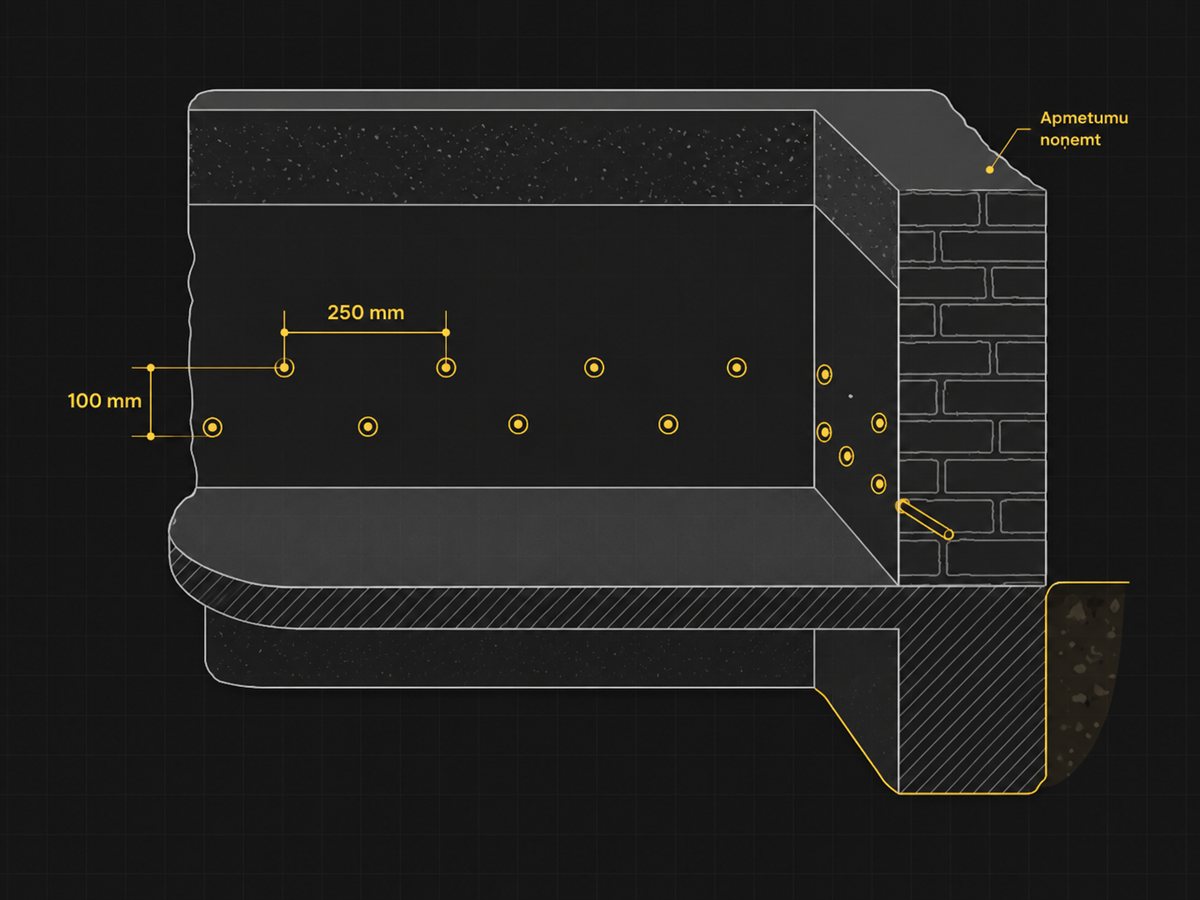
Effective horizontal waterproofing of building walls where the HW horizontal barrier cannot be used for technical reasons. The waterproofing material is introduced into the wall through drill holes, and the chemical barrier spreads outwards in a circular pattern within the wall.
The process uses 1.5 mm thick stainless, acid-resistant steel plates, which are gently driven directly into the mortar joint of the masonry. This achieves complete isolation against capillary moisture between the foundation and wall zones.
This technology allows the plates to be inserted into masonry up to 1 m thick - from one side only! This means the horizontal barrier can also be installed in existing buildings, basement walls or historic structures, preserving their integrity and appearance.
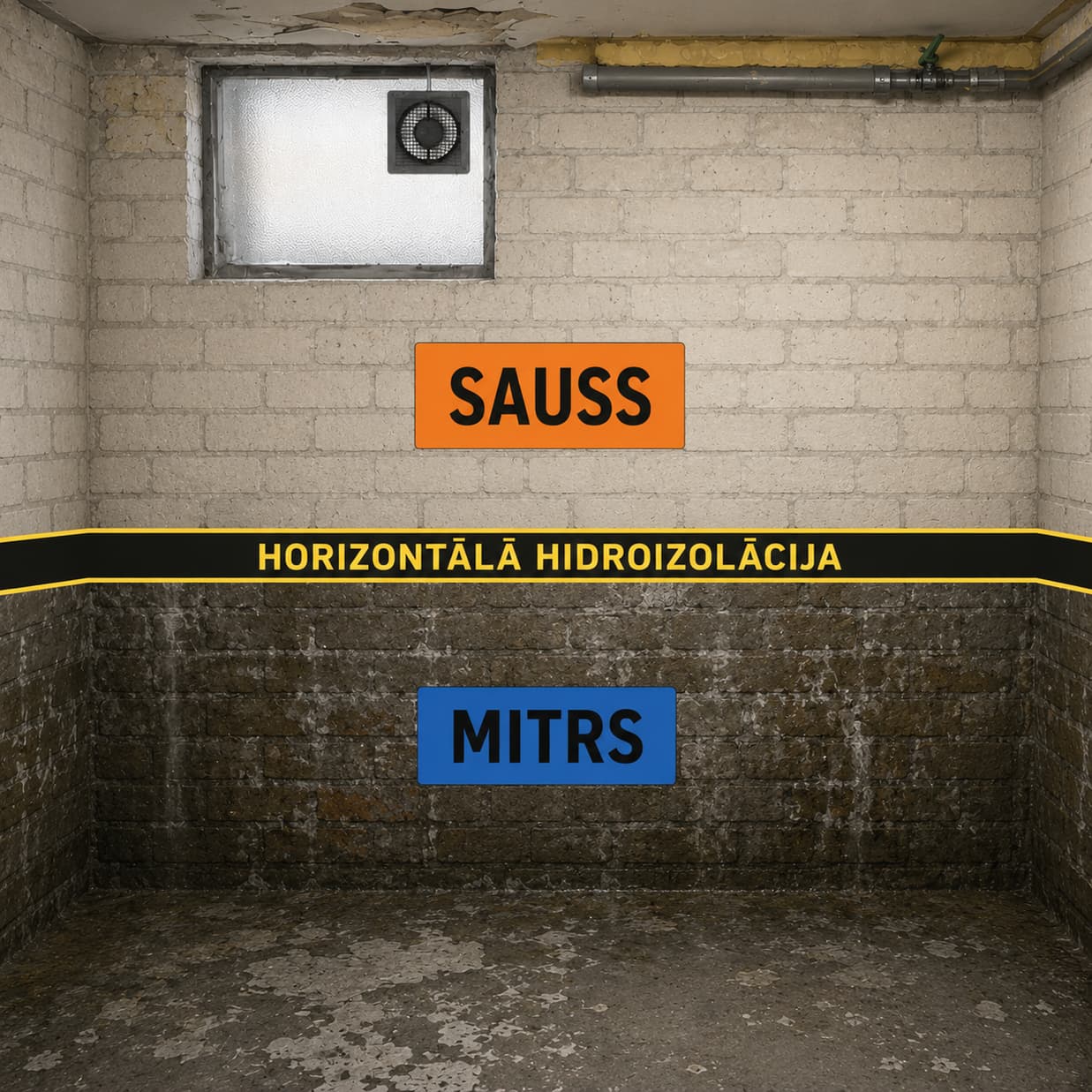
Damp in walls or masonry can have various causes. Apart from existing damage to the waterproofing, the most common cause is a missing horizontal barrier between the foundation and the wall, which should hold back moisture coming up from the ground.
Moisture from the soil soaks into the masonry and rises by capillary action. As the water evaporates, the salts dissolved in it form crystals on the wall surface, causing plaster and paint to come away. As a result, stains appear on the walls, the plaster begins to crumble and the air indoors becomes stale, which significantly reduces quality of life.
Have you noticed signs of damp in your walls? If so, it is very likely that a horizontal barrier was never installed or has been damaged. Older buildings in particular often have no such protection at all, or it is inadequate, so retrofitted horizontal waterproofing will bring a significant benefit and protect the building.
Yes. In basements, the HW horizontal barrier can be combined with vertical Bentogrout waterproofing to protect against both rising damp and water ingress through the walls.
It depends on the cause of the damp and the situation on site. For rising damp in walls, the horizontal HW barrier is the right choice; for water ingress through foundations and walls - vertical Bentogrout injection. During a site visit, an XFIXI specialist will recommend the most suitable solution.

 INCORRECT
 CORRECT